
From Geneva to Lagos: What the New ILO Standard Means for the Future of HR in Nigeria and Africa
By Ejiro Ogunbanjo, Chartered FCIPD, FCIPM, ACIB
There are moments in a career when you realise that the work you have been doing for years has taken you to a much bigger table.
For me, Geneva was one of those moments.
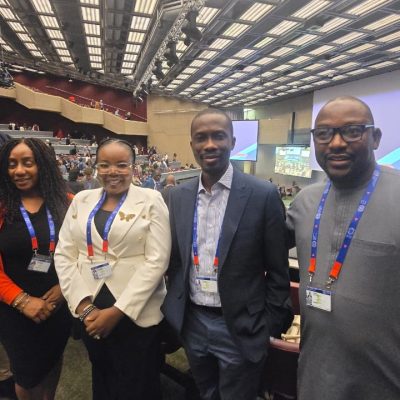
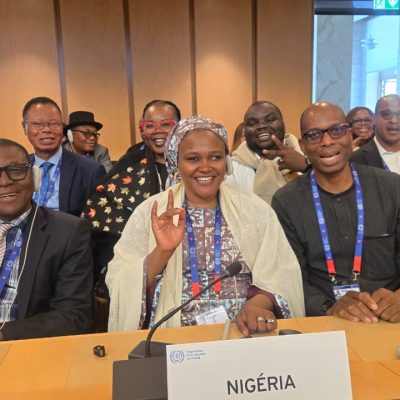
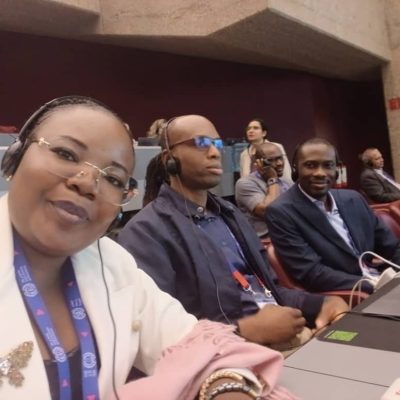
In June 2026, I had the privilege of visiting the ILO as a delegate to the 114th International Labour Conference of the International Labour Organization (ILO) in Geneva, Switzerland where I also participated as a member of the Standard-Setting Committee on Decent Work in the Platform Economy, contributing to the discussions that culminated in the adoption of ILO Convention No. 193 on Decent Work in the Platform Economy.
The experience was professionally significant, but for me, its deeper meaning was personal.
It was a reminder that HR is no longer simply about managing what happens inside an organisation.
Increasingly, HR professionals are participating in conversations about how work itself is designed, regulated, accessed and experienced.
And that distinction matters.
Because the future of work is not coming.
It is already here.
From the HR department to the architecture of work
The International Labour Conference is often described as the international parliament of labour because it is where governments, employers and workers come together to shape international labour standards and policies.
Being part of that process changed the way I think about the role of HR.
In organisations, we often talk about policies as documents.
At the ILO, you begin to see policy differently.
A labour standard is not simply a policy document. It is an attempt to establish a shared framework for how societies understand dignity, rights, responsibility, fairness and economic participation.
That makes HR fundamentally more strategic than many organisations still treat it.
The HR leader of the future cannot only ask:
“What does our policy say?”
We must also ask:
“What kind of world of work is our organisation helping to create?”
That question becomes particularly important as technology changes the traditional employment relationship.
The new standard: why Convention No. 193 matters
The 2026 International Labour Conference adopted Convention No. 193 concerning Decent Work in the Platform Economy, creating the first international labour standard specifically dedicated to the platform economy.
This is significant because the platform economy has challenged many of the assumptions on which traditional employment regulation and HR practice were built.
Who is the employer?
Who is responsible for working conditions?
What constitutes fair remuneration?
How should algorithmic management be governed?
What happens when a worker’s access to income depends on a platform’s automated decision?
How should workers have a voice?
How do we balance innovation, entrepreneurship and flexibility with dignity, fairness and decent work?
These are no longer theoretical questions.
They are becoming practical HR questions.
And they are particularly important for Africa.
Why this matters for Nigeria
Nigeria is already experiencing a rapidly changing labour market.
We have traditional employees working alongside contractors, consultants, freelancers, agents, outsourced workers, digital professionals, creators, entrepreneurs and people earning income through digital platforms.
Our workforce is becoming increasingly fluid.
Yet many of our HR systems remain designed around a relatively simple model:
Employer + Employee + Workplace.
The emerging world of work is much more complex.
Employer + Employee + Contractor + Platform + Algorithm + Ecosystem.
This means that Nigerian HR leaders need to begin thinking beyond conventional employee lifecycle management.
The question is no longer simply how we recruit, reward, develop and retain employees.
We must also consider:
– How do we govern non-traditional workforces?
– How do we protect worker dignity while enabling flexibility?
– How do we manage algorithmic decision-making?
– How do we ensure fairness in technology-enabled recruitment and performance management?
– How do we create meaningful worker voice in distributed work models?
– How do we balance productivity with decent work?
– How do we build employment models that are commercially sustainable and socially responsible?
These questions will increasingly sit at the intersection of HR, employment law, technology, corporate governance and public policy.
That is where I believe the next generation of HR leadership will be defined.
Global standards, local realities
One of the biggest lessons I took away from Geneva is that global labour standards do not eliminate local context.
They challenge us to translate global principles into local realities.
This is particularly important in Nigeria.
Our labour market has its own realities: informality, youth unemployment, digital entrepreneurship, skills gaps, infrastructure constraints, evolving employment models and a rapidly expanding technology ecosystem.
A standard developed at the global level must therefore be interpreted thoughtfully when applied locally.
The question for African HR professionals should not be:
“How do we copy the global standard?”
It should be:
“How do we translate the global standard into something that works for our people, our businesses and our labour market?”
That is where local HR leadership becomes globally relevant.
Nigeria does not need to choose between global standards and local realities.
We need HR leaders who can connect the two.
My journey from HR practitioner to policy contributor
Looking back, the Geneva experience did not happen in isolation.
It sits at the intersection of several chapters of my professional journey.
Earlier in my career, I led HR consulting and research work, including work through the Chartered Institute of Personnel Management of Nigeria (CIPM). That experience exposed me to the broader questions around HR research, professional standards, benchmarking and the development of the Nigerian HR profession.
Today, I have the privilege of continuing that connection between practice, research and education.
Through my work as faculty with Lagos Business School’s HR Academy, I engage HR professionals on the realities of becoming more strategic, commercially minded and future-ready. LBS itself positions the HR Academy around the connection between people, business, organisational change, inclusion and measurable business impact.
This matters because policy only creates impact when practitioners understand how to translate it into organisational practice.
The classroom therefore becomes another part of the policy ecosystem.
The same is true of my work with Edinburgh Napier University’s Business School HRM Professional Advisory Group, where I contribute as an industry representative to conversations around HR education, curriculum development, employability, research and the future relevance of the HR profession. The group deliberately brings academics and HR leaders together to strengthen the connection between HR education, research and professional practice.
Being part of that conversation as an African HR practitioner is especially meaningful to me.
It creates a two-way bridge.
I learn from global practice.
But I also bring African organisational realities into global conversations about HR.
The bridge between academia, policy and practice
This is increasingly how I see my own role in the profession.
Policy informs practice.
Practice informs research.
Research informs education.
Education develops the professionals who will shape the next generation of practice and policy.
And the cycle continues.
That is why institutions such as CIPM, Lagos Business School and Edinburgh Napier University matter beyond their individual mandates.
They are part of a broader professional ecosystem.
CIPM helps strengthen the professional standards and institutional development of HR in Nigeria.
Lagos Business School helps develop business leaders and HR professionals capable of translating knowledge into organisational impact.
Edinburgh Napier provides another platform for connecting academic thinking, global HR practice, employability and professional relevance.
My work across these different environments has reinforced one belief:
The strongest HR profession is one that does not operate in isolation from business, academia, government, technology or society.
What Nigerian HR leaders should do now
Convention No. 193 should not be viewed simply as something for governments or labour lawyers to study.
HR leaders should begin thinking about what it means for their organisations.
I believe there are at least five priorities.
- Rethink the definition of the workforce
HR must develop a broader understanding of the workforce beyond permanent employees.
Our workforce strategies should increasingly account for contractors, consultants, gig workers, outsourced teams, platform workers and other forms of contingent talent.
- Put decent work into the conversation about productivity
Productivity cannot simply mean extracting more output from people.
Sustainable productivity requires the right combination of capability, technology, work design, leadership, wellbeing, fairness and employee voice.
The future of HR is therefore not people versus productivity.
It is people for sustainable productivity.
- Build digital and AI governance into HR
Technology is increasingly making decisions that previously required human judgement.
Recruitment.
Performance management.
Workforce planning.
Scheduling.
Productivity monitoring.
Talent recommendations.
HR analytics.
As these systems become more sophisticated, HR must become part of the governance conversation.
The future HR leader needs to understand not only people, but also data, algorithms, AI, technology and ethics.
- Strengthen worker voice and social dialogue
One of the enduring principles reinforced by the ILO model is the importance of dialogue between governments, employers and workers.
Organisations should take this principle seriously.
Employee voice cannot be reduced to engagement surveys.
It must become part of how organisations understand risk, design work and make decisions.
- Develop globally literate, locally grounded HR leaders
This may be the most important lesson for me.
African HR leaders need global exposure.
But global exposure is valuable only when it improves local impact.
We should be able to sit at a global policy table and understand the conversation.
Then return to Lagos, Abuja, Nairobi, Accra, Johannesburg or Kigali and ask:
“What does this mean here?”
That is the kind of HR leadership Africa needs.
The opportunity for Africa
Africa has a unique opportunity in this transition.
We are not simply inheriting an old world of work.
We are building a new one.
Our digital economies are growing.
Our young population is entering the workforce.
Entrepreneurship is expanding.
Technology is creating new pathways to income and employment.
Remote work is changing access to global opportunities.
Artificial intelligence is reshaping how organisations operate.
The platform economy is expanding.
These developments create enormous opportunities.
But opportunity without appropriate systems can also create vulnerability.
That is why decent work, inclusive growth, responsible technology and effective labour policy must remain part of the conversation.
Africa needs innovation.
But we also need institutions.
We need jobs.
But we also need quality jobs.
We need flexibility.
But we also need fairness.
We need technology.
But we also need humanity.
From Geneva to Lagos
When I left Geneva, I did not leave with the belief that international policy could simply be imported into Nigeria.
I left with a stronger conviction that Nigerian HR professionals must have a voice in shaping the future of work.
We need practitioners who understand the realities of organisations.
Researchers who understand evidence.
Educators who understand how to develop capability.
Policymakers who understand the labour market.
Business leaders who understand the commercial imperative.
And HR professionals who can connect all five.
That is ultimately what the ILO experience represented for me.
It was not simply an opportunity to attend an international conference.
It was an opportunity to contribute to the architecture of work.
And it reinforced something I have increasingly come to believe about the HR profession:
Our responsibility is not merely to manage the workforce that exists.
It is to help shape the workforce, workplaces and systems that society will need next.
From Geneva to Lagos, that is the work ahead.
And for HR in Nigeria and across Africa, the opportunity is enormous.
About the Author
Ejiro Ogunbanjo, Chartered FCIPD, FCIPM, ACIB is a commercially astute Chief Human Resources Officer, HR strategist, educator and policy contributor with over 15 years of experience across banking, financial services, technology, telecommunications, consulting and digital businesses.
She currently serves as Chief Human Resources Officer at a Bank and contributes to the advancement of the HR profession through executive education, research, professional advisory work and international labour policy.
In 2026, she was a delegate to the 114th International Labour Conference in Geneva and also served as a member of the ILO Standard-Setting Committee on Decent Work in the Platform Economy, contributing to the process that resulted in the adoption of Convention No. 193.
She is also a faculty member of the Lagos Business School HR Academy and serves on the HRM Professional Advisory Group at Edinburgh Napier University Business School, where she contributes an African practitioner perspective to conversations on HR education, research, employability and the future of the profession.
Her work sits at the intersection of business strategy, people strategy, technology, organisational transformation, HR policy and the future of work, with a particular interest in translating global ideas into practical solutions for African organisations.